Beardsley – by Aileen Reid (book review)

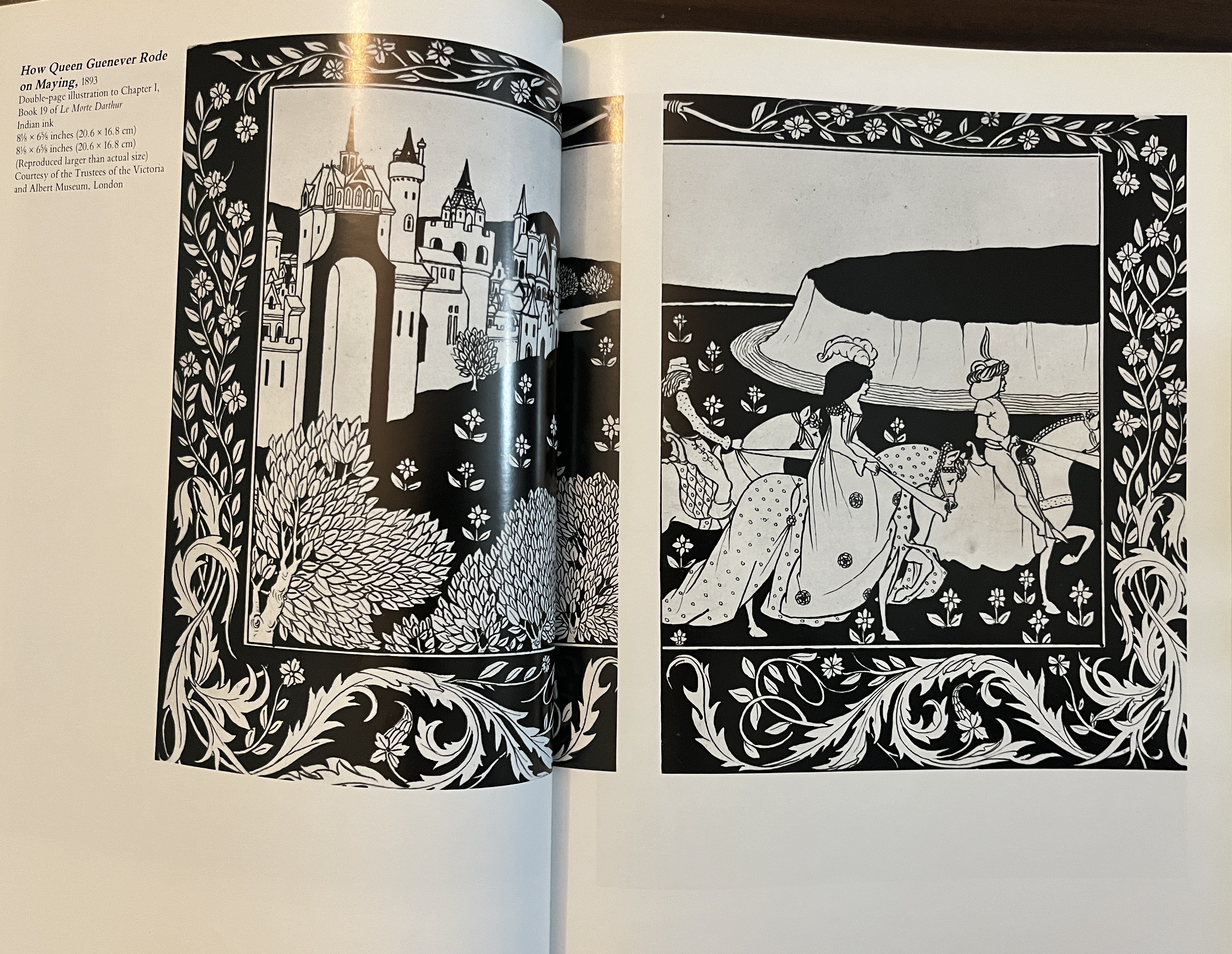
I am interested to lay down my thoughts regarding these 3 images that i selected to post from the said book (as per the blog post title). The first one denotes a strong sense of Opacity and effect of Realism. I thought it was a wood cut or a print. Its ink, yet this ink goes beyond blackness, darkness. And the same occurs with the flat white sky. Then the carved out hill and then the figures we see. There is something so much outside the world we inhabit in these non tonal works. The clear cut divide of the black and the white.

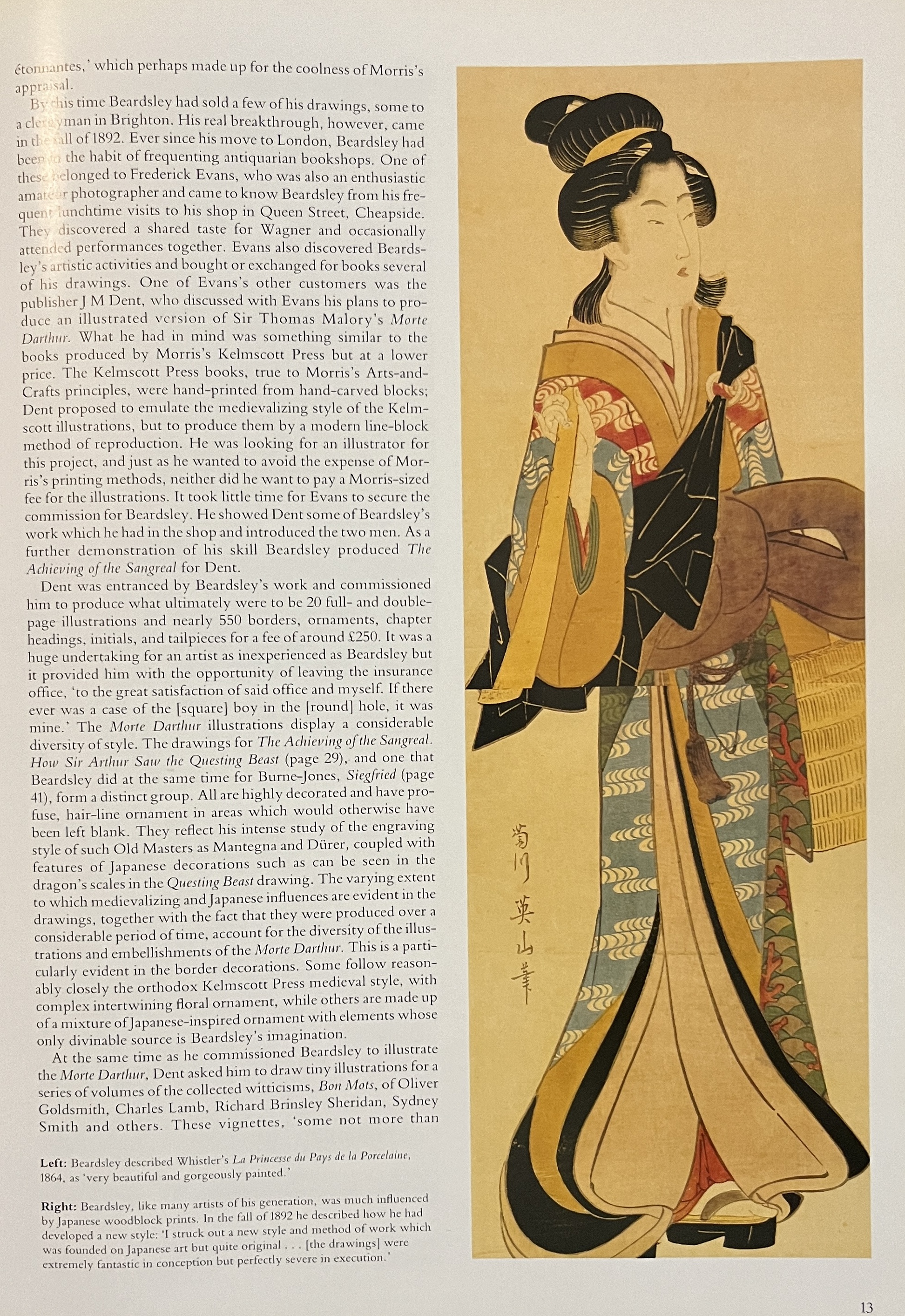
The Second is the Japanese Wood Cut Print. The colour is there but the Line effect is remarkable. It makes you see the image with such clarity, opacity, transparency. The design, patterns on the dress are seen so distinct, separate in action as a layer. The white lines on the black clothed drapery. The Folds, the hair, everything has such flow and meaning to it. What and when and how it is revealed, highlighted, toned down, brightly coloured, layered etc. The work is so black and white and drawing as it is coloured. Its the wood cut, the art where it lies originally. The carved lines with that meaning, that intention of making this work, the artist carves it and thinks through the colours to get to this reproduction. I think, we as artist who work in Drawing should shift between drawing on paper and wood cut prints and back.

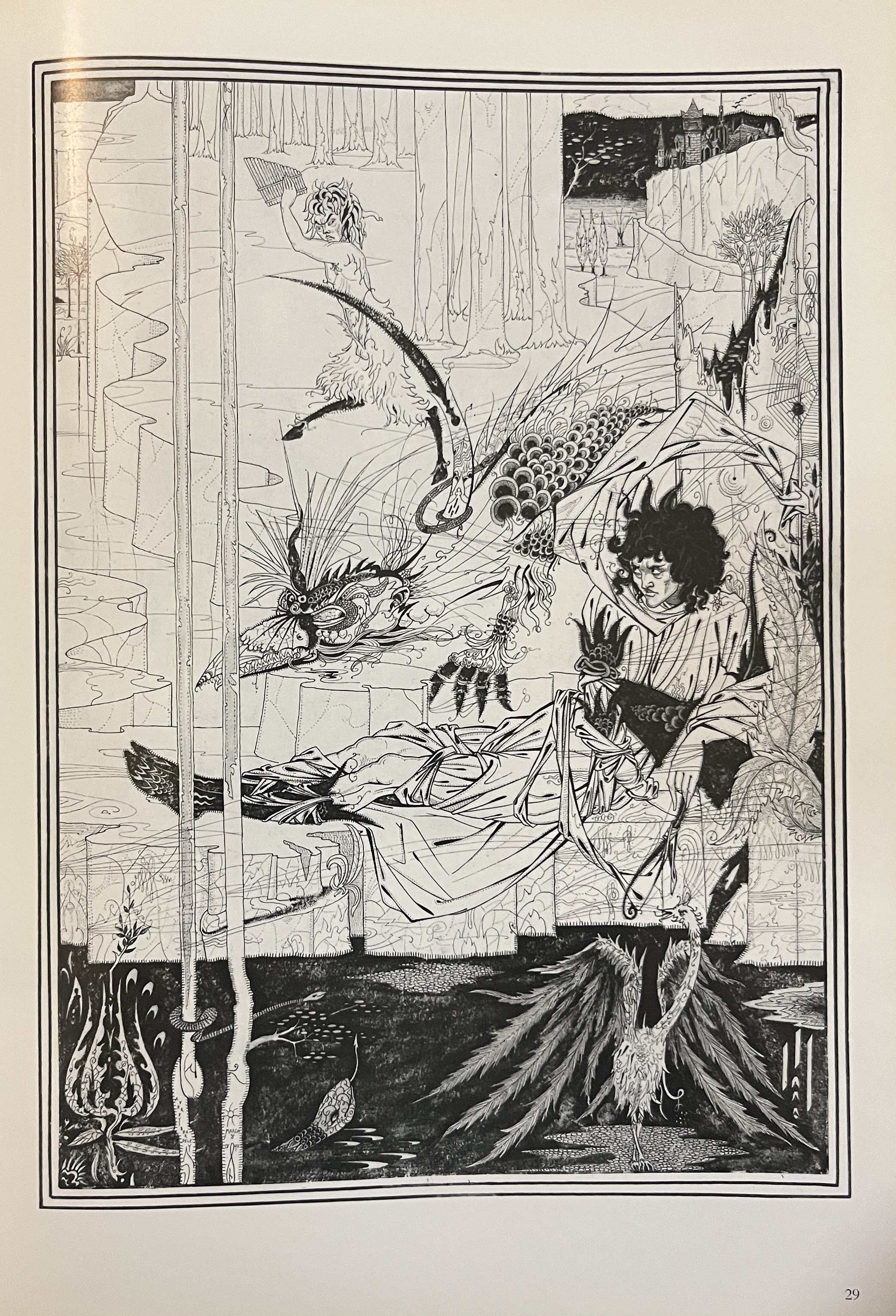
Work 3 is where I see myself at today. And for the past 20 years or so. It has lines which layer themselves on the screen of the paper. Black comes and goes, washes of ink, come and go. Come and go means that I see the work being built up from the first line which is drawn, then things come and go, they get built up, crossed over, built up even more and then keep building in layers of thick and thin lines, over lapping, under lapping. Then we see the Artist blocking, just completely blocking the paper with ink. That same solid effect that we saw in the first work, but here is far more challenging as a work. What generated interest was, maybe for the artist the forms being created generated themselves and the artist followed suit. So you have that bridge of letting drawing lead you. That i felt in this last work. Especially when i see how imagined forms came into being. That same push and pull between Semi abstraction and Representation. Design, patterns can do that. They can be tied up inside a Jaali work of a marble / stone window of a Mughal Architecture building and then also be let free to guide you when you repeat them or they repeat themselves.

Beardsley is like a good introduction to what Pen and Ink can do.

10:16 pm.

Made in Japan

Hiroshige’s diary sketchbooks, Korin’s sketchbooks, Okyo’s Sketch scrolls. Also noteworthy was reference to the Yamato-e-scrolls from the 11 to 13th, hokusai drawing

Comparing:

  1. Maruyama Okyo

https://www.britishmuseum.org/collection/object/A_1913-0501-0-515

some of the terms being used by British Museum which are interesting to note are:

Sketch, Handscroll, preparatory drawing. It is seen as a sketch, as it uses lines, especially if you notice how the faces are drawn out. the concentration is to make an eye, a nose, lips and an expression. It is also seen as a preparatory drawing. This would mean, the eye is being prepared as if this is not the final thing. That keep preparing. Keep on preparing. When I make karah parshad at home, i keep preparing it till its done. But is it done at every step, or we see it till it resembles karah parshad. Dekho bull shit philosophy shuru ho gayi, na sar na payr.

Not really. I dont do bullshit philosophy ( telling my self). Do we really know that for Maruyama, that it was a moment of preparation?

2. the Sketchbooks of Utagawa Hiroshige

https://www.britishmuseum.org/collection/image/1549739001

Description

Sketchbook, one of four (Jap.Ptg.1545-1548). Sketches of scenes and views along the Kisokaido highway. Ink and occasional light colour on paper.

everything is drawn out proportionately to each other. Hiroshige has a sense of scale for everything. The brush lines on the 6 x 9 inches sketchbook paper are drawn out lines ( as per western art, its drawing on paper ) or painted lines ( as per asian art, it’s a finished work on paper or silk). They tell us what he is seeing. He draws out everything that he sees in simplified lines where when it comes to depth in landscape, the built, constructed objects, the bridges, the post lamp, from the distance he is from the object, he marks everything down in simple strokes as if its a photograph taken from that point of view. The human figures are also noted down in strokes of brush lines with ease in their movement. the empty spaces of the paper fill out volume.

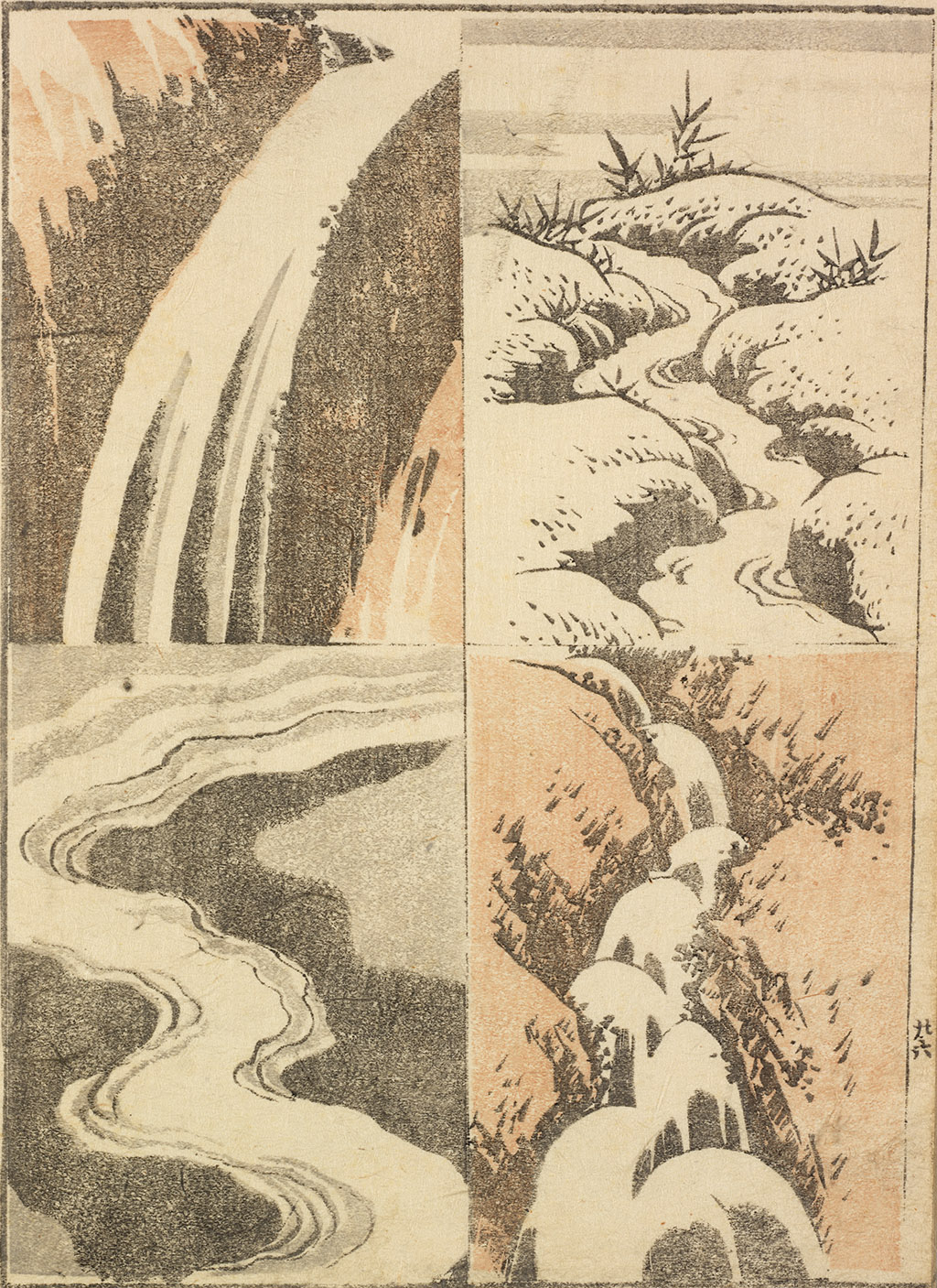
3. Katsushika Hokusai’s random sketch

https://risdmuseum.org/art-design/collection/random-sketches-hokusai-hokusai-manga-vol-1-313941?return=%2Fexhibitions-events%2Fexhibitions%2Fhokusais-sketchbooks

RISDM 31-394-1 detail

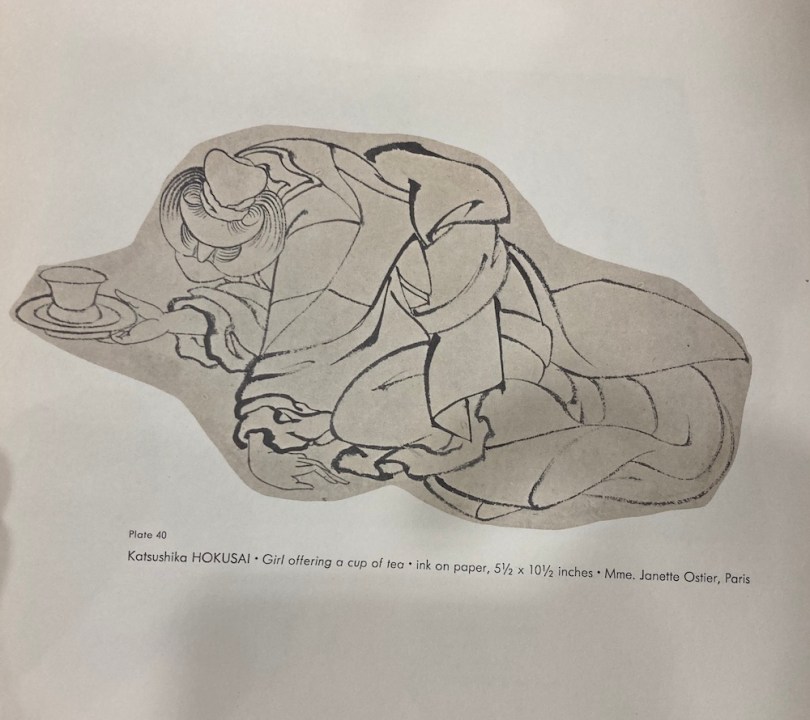
The drawing is wood cut and we see the left over space of the wood as water. The visual by the artist, as i look at it, spend time staring at the 4 images, makes me see lines which expand into forms. Lines which convey the movement of the water, then these lines become form conveying depth of the stones, or represent soild objects.

Then lighter tone represents something, as if supporting the darker tone marks, stains, impressions. Or in some places, something which has less visibility, is at distance.